Five years later, the agency still can’t define what excessive noise is.
Since I last posted five years ago, we’ve gone from a Democratic president to a Republican one. Control of Congress has flipped. Governors have come and gone. The FAA has new leadership.
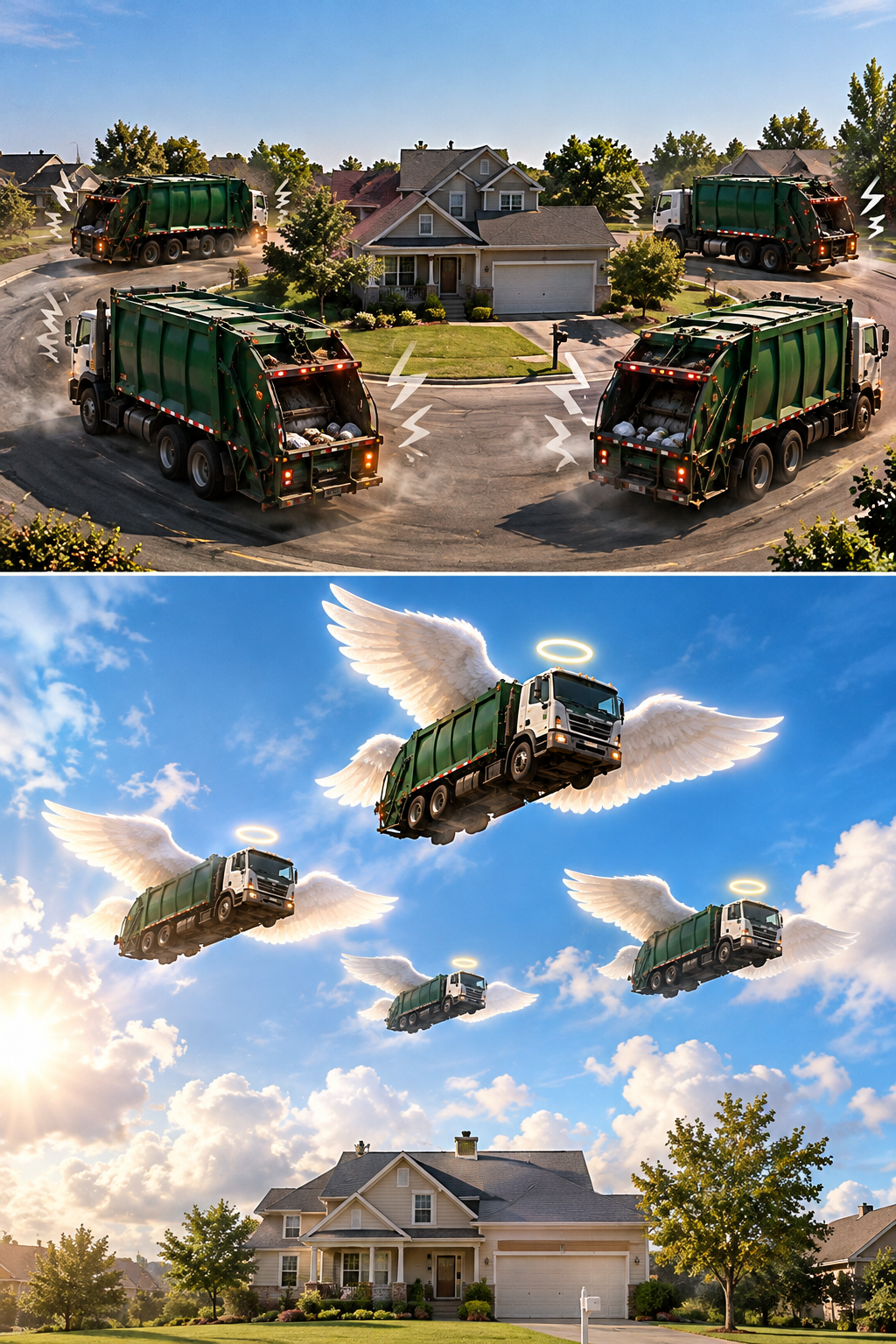
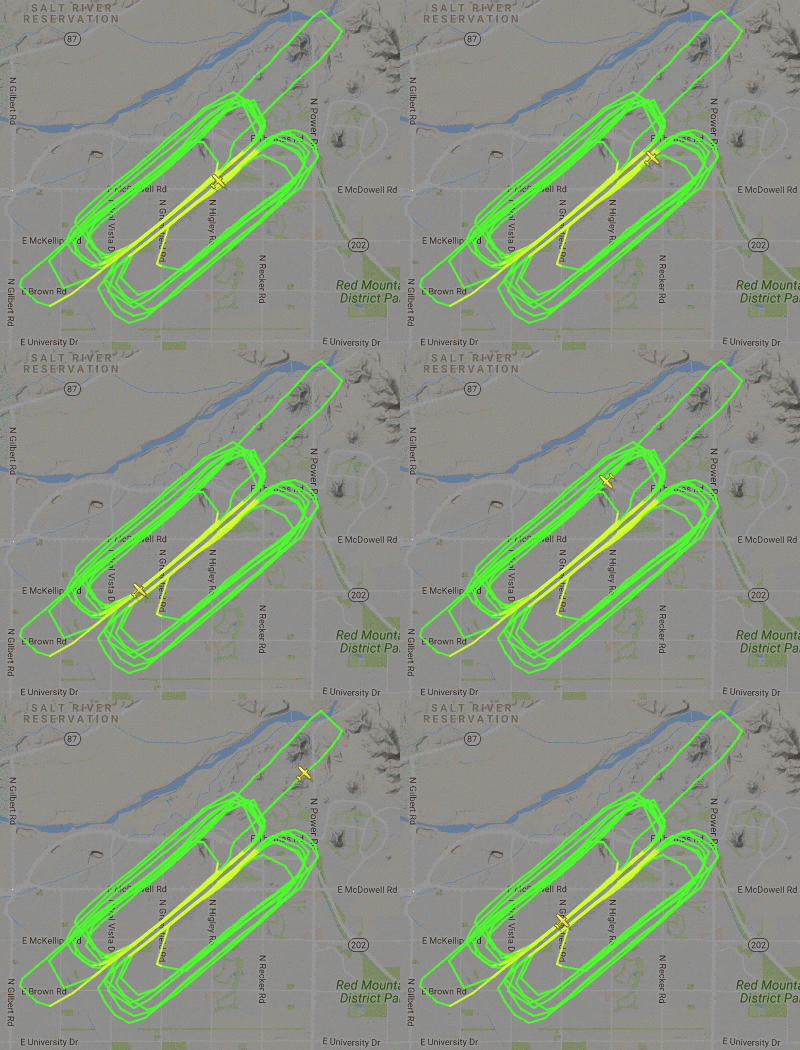
But for people living under flight paths, nothing significant has changed.
Five years. No changes. Let that sink in.
To be fair, Congress did take action. The FAA Reauthorization Act of 2024 required the FAA to review and revise its noise regulations—including its widely criticized noise-measurement methodology, which averages noise over entire days and years, effectively making disruptive events disappear on paper. It also directed the agency to consider noise-reduction measures when implementing or substantially revising flight procedures.
That deadline passed in May 2025. Yet the FAA’s own website still describes the noise-policy review as unfinished. The agency established its Aircraft Noise Advisory Committee in January 2025, but didn’t solicit membership nominations until July 2026.
Two years after Congress acted, the process continues. And the noise continues.
In explaining its noise-policy review, the FAA states the obvious: changing a policy or measurement standard won’t, by itself, make airplanes quieter. The agency then identifies what will: quieter technology, fewer aircraft operations, and “voluntary changes to the way aircraft operate.”
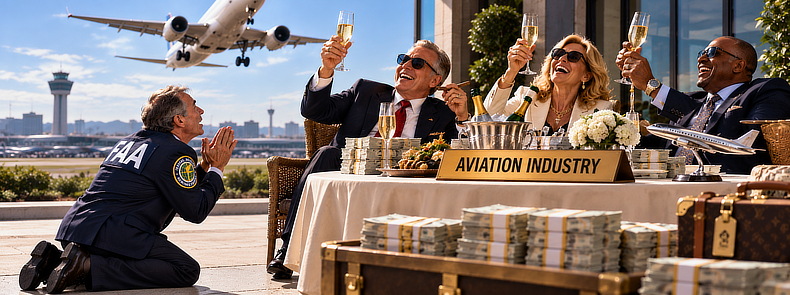
Wait a minute. Voluntary? What happened to the power to enforce policy? We’ve been told by elected officials that airports are the authority. We’ve been told by airports that the FAA is the shot-caller. Now we’re told by the FAA that the aviation industry has the power?
In this three-cup monte shell game, the ball just vanished!
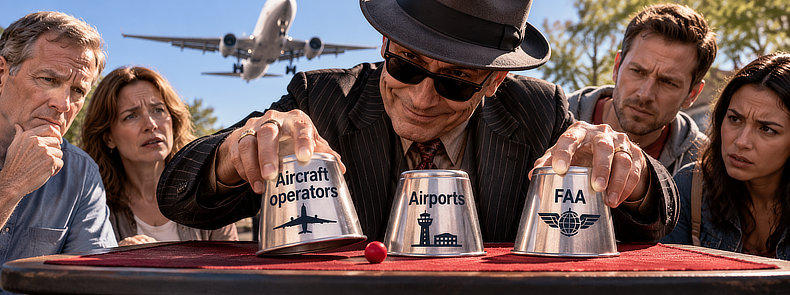
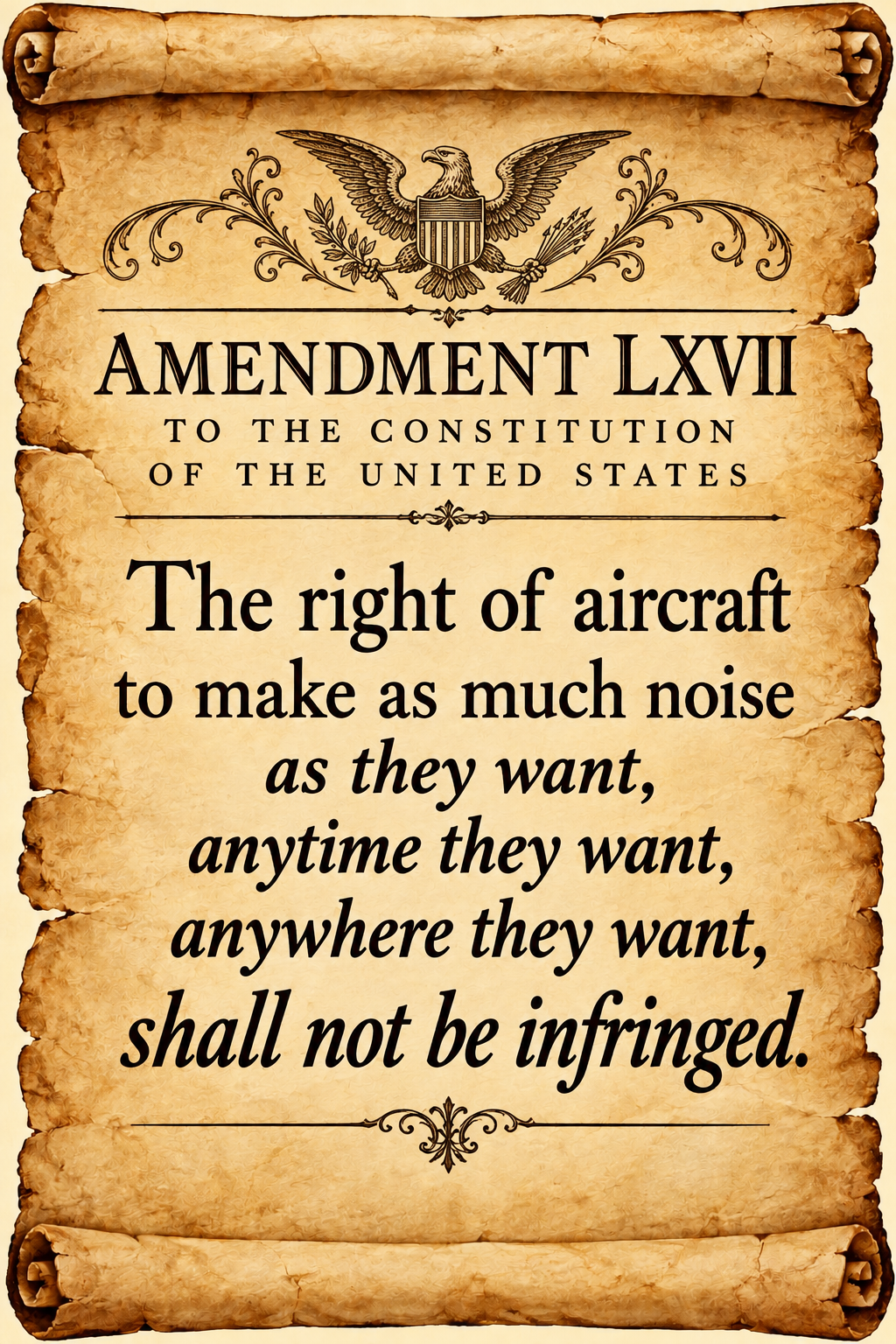
Why should noise reduction depend on voluntary cooperation when the FAA is the federal regulator responsible for aviation? Don’t get me wrong; I’m all for relying on the kindness of strangers. Just not when multinational monied interests are involved. What happens when voluntary measures aren’t forthcoming? What is the FAA prepared to do when the industry doesn’t play nice and make the changes communities need?
The FAA offers no convincing answer–just an abdication of responsibility.
Under 49 U.S.C. § 44715, Congress expressly authorized the FAA to prescribe standards for measuring aircraft noise and regulations to control and abate it. The FAA isn’t merely an adviser to the aviation industry; it is a federal regulator with authority to make rules governing aircraft noise. And Congress reinforced that responsibility in 2024 by directing the FAA to consider noise-reduction measures when implementing or substantially revising flight procedures.
The FAA should stop setting itself up to fail. Rather than suggest that some distant future magical technology is the answer, or that an industry which indirectly profits from its noise waste product will suddenly grow a conscience, the FAA should make clear to the worst of these polluters how it intends to use its existing authority to achieve meaningful noise reduction, including by deploying the broad range of enforcement powers at its disposal.
Five years ago, I was writing about aircraft noise. Five years later, I’m still writing about aircraft noise.
The only difference? There’s a lot more of it now than before.